
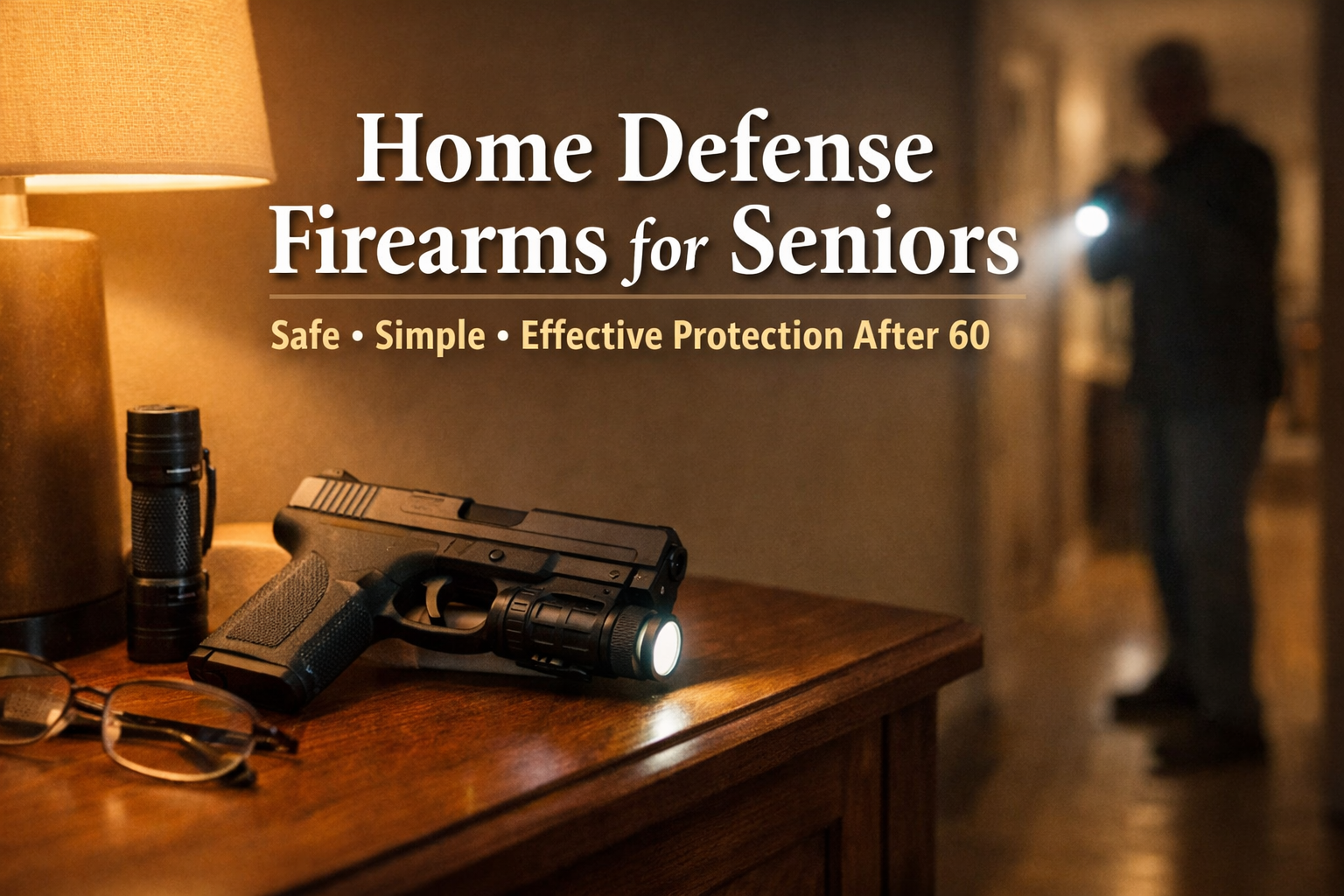
Choosing a home defense firearm after 60 is different than it is at 25.
Strength changes. Grip strength changes. Joint flexibility changes. Reaction time changes. But the need to protect yourself and your home does not change.
The best home defense firearm for seniors is not the most powerful, the most tactical, or the most expensive.
The best firearm for you is going to be the one you can:
- Operate safely
- Control comfortably
- Practice with regularly
- Access quickly
- Use confidently under stress
Home defense is about control and reliability, not firepower.
Let’s walk through the firearm types most seniors find practical — and one critical factor many people never think about: how loud a gunshot is inside a house.
What Makes a Good Home Defense Firearm for Seniors?
Before we talk specific firearm types, understand what matters most.
A senior-friendly defensive firearm should have:
- Manageable recoil
- Simple operation
- Easy loading or racking
- Comfortable grip
- Clear sight picture
- Reliable function
- Safe storage options
If a firearm is difficult to operate at the range, it will be far harder to operate under stress.
Revolvers: Simplicity and Reliability
For many seniors, revolvers remain the gold standard of simplicity.
There is no slide to rack.
No external safety to manipulate.
No magazine to seat.
The manual of operation is straightforward:
Load → Close cylinder → Press trigger.
Why Revolvers Work Well for Seniors
- No hand strength required to chamber a round
- Simple manual of operation
- Extremely reliable when maintained
- Easy to visually confirm loaded status
- Works well for those with arthritis
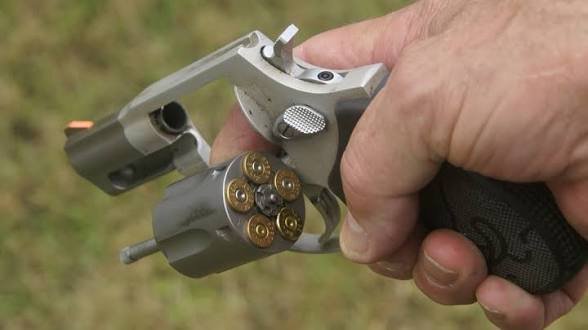
For someone with limited grip strength or reduced hand mobility, a revolver removes many mechanical challenges found in semi-automatic pistols.
Things to Consider
Revolvers are simple — but not effortless.
- Recoil can feel sharp in lightweight models
- Trigger pull is often heavier than semi-autos
- Capacity is typically 5–6 rounds
Training is still essential. Simplicity does not replace practice.
Easy-Rack Semi-Automatic Pistols
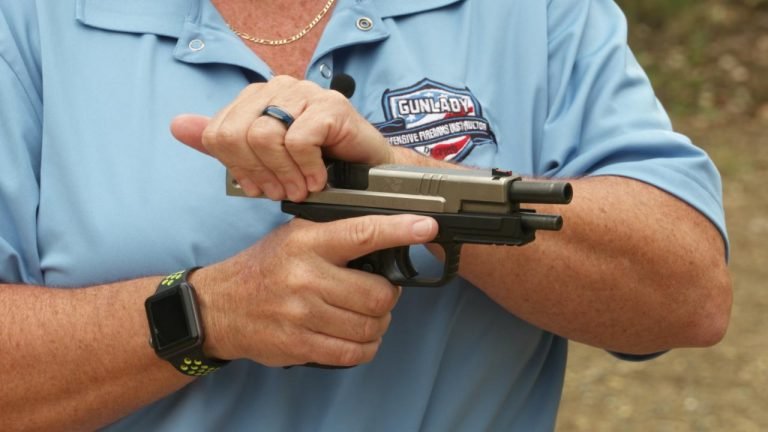
Traditional semi-automatic pistols require slide strength many seniors find difficult.
Manufacturers recognized this problem and designed easy-rack pistols — firearms specifically engineered for reduced hand strength.
One of the most widely known examples is the EZ-style pistol line from Smith & Wesson.
Why Easy-Rack Pistols Are Popular With Seniors
- Reduced slide tension
- Lighter recoil spring
- Easier loading and chambering
- Often include grip safeties for added confidence
- Typically chambered in manageable calibers
For many seniors, these pistols strike a strong balance between simplicity and capacity.
Advantages Of Semi Auto’s Over Revolvers
Higher ammunition capacity
Typically lighter trigger pull
Slim grip profiles
Faster reload potential
Things to Consider
Semi-automatic pistols have more moving parts and steps:
- Load magazine
- Insert magazine
- Rack slide
- Clear malfunctions if needed
This is why training matters even more with semi-autos.
But for many seniors, modern easy-rack pistols are very manageable.
9mm Carbines and Short-Barreled Defensive Rifles
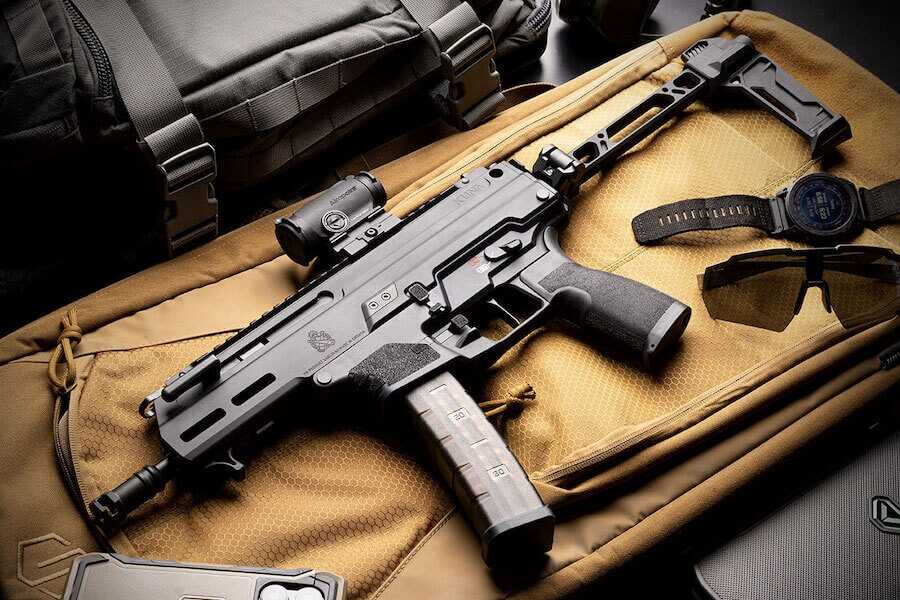
Many people assume handguns are the only practical home defense option.
That is not true.
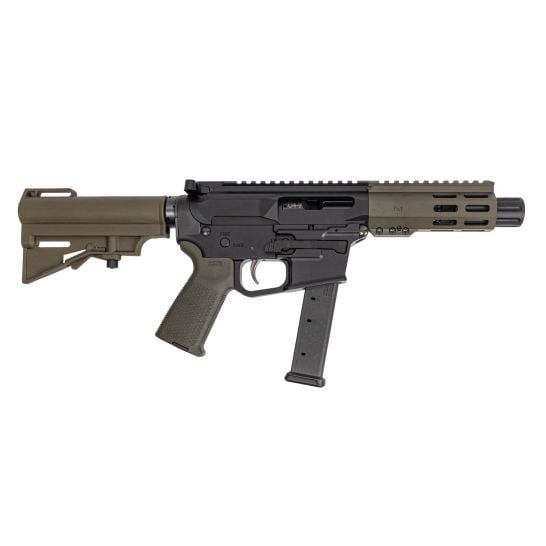
A pistol-caliber carbine (PCC) — essentially a shoulder-fired firearm chambered in handgun ammunition — can be one of the easiest firearms for seniors to control.
Why Carbines Can Be Easier Than Handguns
Handguns require strong wrist stabilization and precise aim.
Carbines offer:
- Shoulder support
- Two-hand stability
- Longer sight radius
- Reduced felt recoil
- Easier aiming under stress
For seniors with reduced hand strength or shaky grip, a carbine can feel dramatically easier to control.
Why 9mm Carbines Are Popular
- Manageable recoil
- Lower muzzle blast than rifle calibers
- Good defensive performance
- Often compatible with handgun magazines
- Easier accuracy at indoor distances
Many seniors who struggle with handgun recoil find carbines far more comfortable to shoot.
Things to Consider
Carbines are larger and require:
- Safe storage planning
- Practice with shoulder mounting
- Familiarity moving through tight spaces
But from a pure shooting control standpoint, they are often the easiest defensive firearm to operate.
Using Weapon Lights and Flashlights for Home Defense
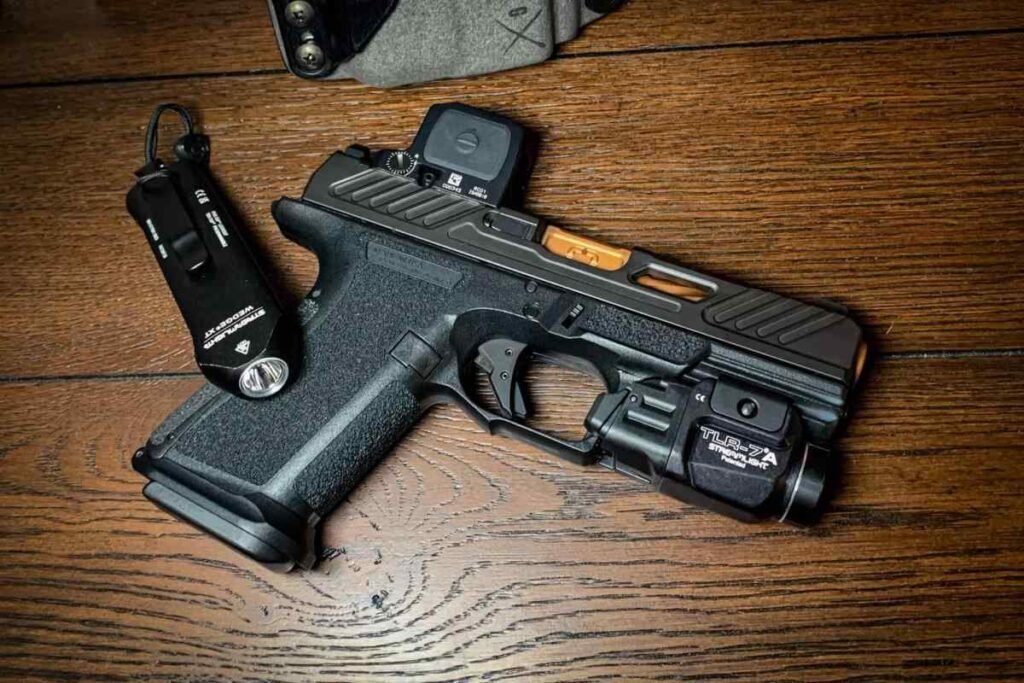
Most home defense situations happen in low light.
You may wake up in darkness.
A hallway may be unlit.
A shadow may be movement — or it may be nothing.
You cannot safely defend what you cannot clearly see.
Positive identification is critical.
Why Lighting Matters
A weapon light or handheld flashlight helps you:
- Identify whether someone is a real threat
- Avoid mistaking a family member or guest for an intruder
- See what is in the person’s hands
- Aim more accurately if force becomes unavoidable
- Maintain awareness of your surroundings
Never rely on silhouettes, shadows, or movement alone.
You must clearly identify your target.
Weapon-Mounted Light vs Handheld Flashlight
Both have advantages.
Weapon-Mounted Light
Always aligned with where the firearm points
Leaves one hand free for stability
Fast activation in emergencies
Handheld Flashlight
- Can illuminate areas without pointing firearm at them
- Useful for general navigation
- Works even when firearm is not in hand
Many experienced defenders keep both available.
Important Safety Reminder
Never point a firearm at anything you have not positively identified as a threat.
A flashlight helps you make that decision safely.
Seeing clearly prevents tragic mistakes.
Always Know What’s Behind Your Target
This is one of the most important rules of defensive shooting — and one many people overlook.
You are responsible for every round you fire.
Bullets do not always stop at the target. They can:
- Pass through walls
- Travel into other rooms
- Exit the home
- Strike unintended persons or property
Before pressing the trigger, you must know:
- What you are aiming at
- What is immediately behind it
- What is beyond that
In a home environment, this matters even more.
Think about:
- Bedrooms behind walls
- Family members in adjacent rooms
- Neighbors in close proximity
- Stairways or shared living spaces
Defensive shooting requires awareness — not just reaction.
Training yourself to think about background and surroundings is part of responsible home defense.
Creating a Defensive “Funnel” Inside the Home
You do not need to move through your home searching for an intruder.
In fact, for most people — especially seniors — moving toward danger is the wrong strategy.
A safer approach is to control where someone must come to reach you.
This is sometimes called creating a defensive funnel.
What Is a Funnel?
A funnel is a narrow area an intruder must pass through to reach your location.
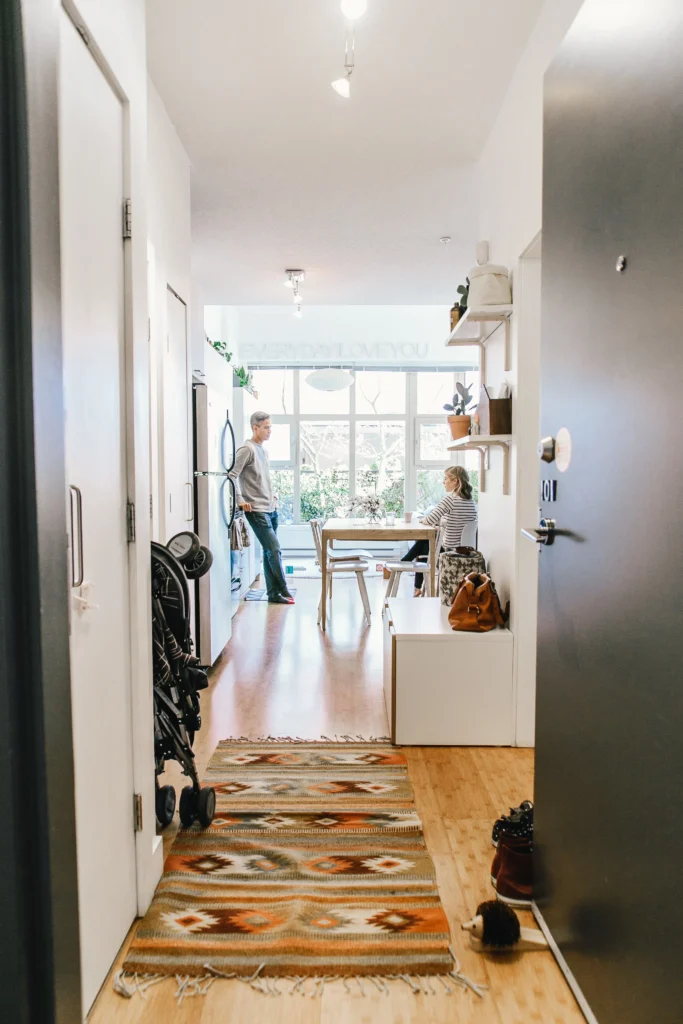
Common examples include:
- Hallways
- Stairways
- Doorways
- Entry corridors
These natural choke points limit movement and visibility.
That gives you the defender a major advantage. Believe me having an advantage in this kind of situation is a very good thing to have.
Why Funnels Help Seniors
A funnel can:
- Limit the intruder’s approach direction
- Slow movement toward you
- Improve your visibility
- Reduce the need to move through the house
- Allow you to stay in a safer, stable position
Instead of searching for a threat, you allow the threat to come through a predictable path.
Movement creates risk. Stability creates control.
A Safer Defensive Position
Many home defense plans center on:
- Staying in a secure room
- Calling emergency services
- Monitoring the approach path
- Using cover if available
- Avoiding unnecessary movement
The goal is not confrontation.
The goal is protection until help arrives — or until the situation is clearly unavoidable.
Light, Awareness, and Positioning Work Together
A responsible home defense plan is not just about the firearm.
It includes:
- Seeing clearly (lighting)
- Knowing surroundings (background awareness)
- Controlling movement paths (funnels)
These principles reduce confusion, prevent mistakes, and improve safety for everyone in the home.
Final Safety Perspective
Defensive tools are only part of preparedness.
Equally important are:
- Clear visibility
- Thoughtful positioning
- Awareness of surroundings
- Controlled decision-making
Most defensive encounters are chaotic and stressful.
Preparation brings structure to chaos.
And structure is what keeps you — and those around you — safe.
The Reality Few People Talk About: How Loud Is Shooting Inside a House?
This is critical — and often ignored.
Gunfire indoors is extremely loud.
Not just uncomfortable. Not just startling.
Potentially damaging.
Approximate Indoor Gunshot Sound Levels
- 9mm handgun: ~160 decibels
- Revolver: similar or slightly higher
- 9mm carbine: slightly lower but still extreme
For comparison:
- Jet engine at takeoff: ~140 dB
- Pain threshold: ~130 dB
Gunfire indoors can exceed levels that cause instant hearing damage.
What Happens When a Gun Fires Indoors
- Massive sound reflection from walls
- Pressure wave amplification
- Temporary disorientation
- Ringing ears (tinnitus)
- Possible permanent hearing loss
Even one shot can affect hearing.
Multiple shots make it worse.
Why Hearing Protection May Not Be Practical in an Emergency
At the range, you wear ear protection.
During a sudden home defense situation, you will just not have time.
That is reality.
Which means:
- Expect extreme noise
- Expect disorientation
- Expect auditory shock
Training helps you understand this reaction.
How Some People Reduce Indoor Gunshot Sound Impacts
(Always follow local laws and safe practices.)
Options may include:
- Electronic hearing protection staged with firearm
- Lower-recoil defensive calibers
- Training for noise awareness
- Understanding that survival takes priority
- Supressors / silencers, if they’re legal where you live.
Your safety comes first — but awareness prevents surprise.
Training Matters More Than the Firearm
The most important factor is not the gun.
It is familiarity.
You should be able to:
- Load confidently
- Clear safely
- Aim naturally
- Fire under control
- Store securely
Even occasional practice builds comfort and confidence.
Safe Storage Is Part of Home Defense
Accessibility must be balanced with safety.
Options include:
- Quick-access lock boxes
- Biometric safes
- Bedside safes
- Trigger locks (if appropriate)
A defensive firearm must be:
Accessible to you
Inaccessible to unauthorized persons
Choosing What’s Right for You
There is no universal best home defense firearm for seniors.
But there is a best firearm for your:
- Strength level
- Dexterity
- Comfort
- Training willingness
- Living environment
Many seniors choose:
Revolver — for simplicity
Easy-rack semi-auto — for balance of features
9mm carbine — for maximum control
Each is a valid defensive tool when used responsibly.
The Real Goal of Home Defense
The goal is not confrontation.
The goal is survival and safety.
A well-planned system includes:
- Deterrence
- Alarm notification
- Video recording
- Emergency response
- Defensive firearm only if unavoidable
Force is always the last layer — never the first.
Final Thoughts
Protecting yourself after 60 is about smart choices, not heroic ones.
The best home defense firearm is the one you can operate safely, confidently, and responsibly.
Revolvers offer simplicity.
Easy-rack pistols offer balance.
9mm carbines offer control.
And every firearm — regardless of type — will be extremely loud if fired indoors.
Understanding that reality is part of responsible preparation.
Confidence comes from knowledge.
Safety comes from practice.
Security comes from planning.
About The Author

1 thought on “Best Home Defense Firearms for Seniors: What Works, What’s Manageable, and What to Expect”