I was talking to a buddy of mine the other day. He lives in Arizona — a temperate climate not typically associated with illness — and he was telling me how sick he and his wife were with the flu. High fevers, body aches, sweating, chills, I could go on, but you get the picture. He didn’t say if he got a flu shot, but he did go to urgent care. He was able to get Tamiflu and started taking that and began to feel better.
That got me thinking that I might not be as fully prepared as I could be for the “super flu” that seems to be raging across the US and globally right now. I have not gotten a flu shot, but I have been trying to eat healthier and taking vitamins/ supplements like Vitamin C , D3 and Zinc. So give me a B+ for trying.
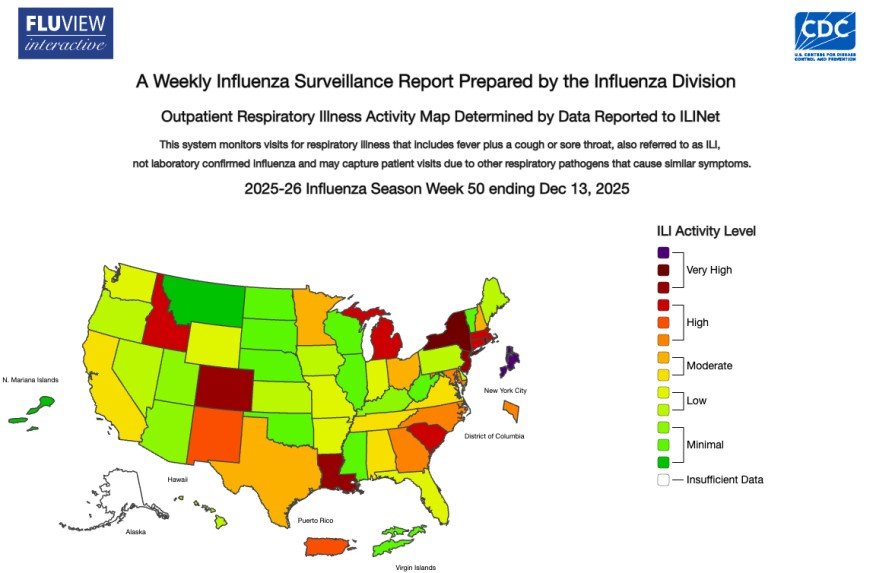
As we head into the new year, it looks like an outbreak is taking shape: the so-called “super flu” – it’s a mutated strain of Influenza A-(H3N2) subclade K – is spreading rapidly across the U.S. A recent map shared on X — (see below) highlights states being hit hardest, cases are surging in places like New York, California, Louisiana, and other states. According to the latest CDC FluView report (as of December 20, 2025), flu activity is elevated nationwide, with at least 7.5 million illnesses, 81,000 hospitalizations, and 3,100 deaths so far this season.
Current flu activity map showing the hardest-hit states (Source: CDC/The Hill, Dec 2025)
For seniors over 55, this is especially alarming. H3N2 strains historically hit older adults hardest, causing more severe symptoms, complications like pneumonia, and higher hospitalization rates. If you’re 55+, your immune system may not respond as robustly, making preparation crucial for staying safe and independent during outbreaks.
This guide is tailored for senior preppers: practical, low-effort steps to help prevent infection, stockpile essentials, and manage your symptoms if you do get sick. No panic—just smart, senior-friendly preparedness.
Understanding the ‘Super Flu’ Threat for Seniors
The “super flu” refers to the dominant H3N2 subclade K variant, which emerged late this year and may not match this season’s vaccine perfectly. It’s spreading faster than expected, with hospitalizations nearly doubling in recent weeks. Historically, it has been shown that flu seasons are tougher when H3N2 leads – especially for us seniors.
Why seniors are more vulnerable:
Weakened immunity: By age 65+, your body produces fewer antibodies.
Comorbidities: 60-70% of seniors have conditions like heart disease or diabetes that worsen flu outcomes.
Stats: 90% of flu deaths occur in 65+ seniors, per CDC historical data.
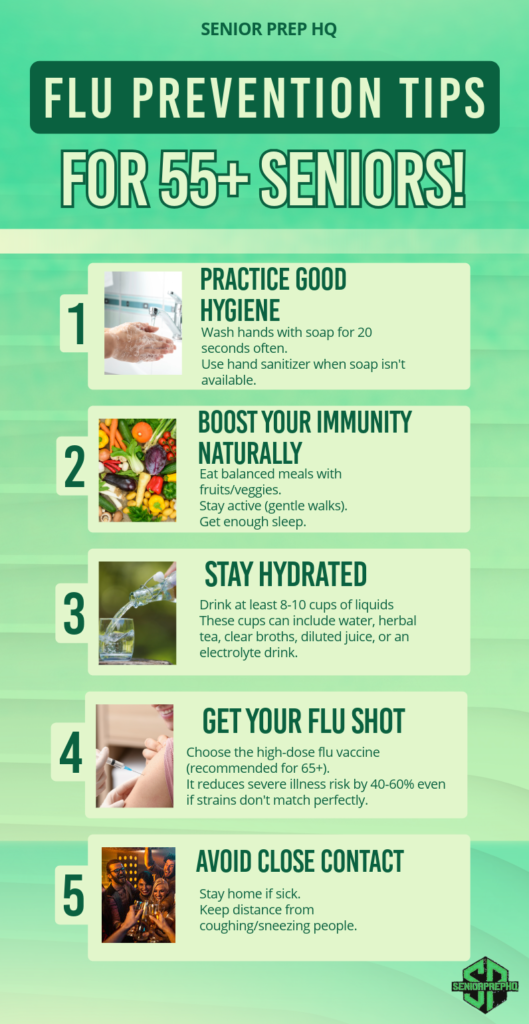
Essential Prevention Strategies for 55+ Seniors
Prevention is your best defense – and it’s a mostly low-effort for seniors. I personally question the statistics touting the efficiency of the flu shot for lowering infections. So please do your own due diligence. I’m also not a big fan of masks but if you believe they can help you, then by all means, mask up.
- Get Vaccinated: Opt for the high-dose flu shot designed for 65+ seniors. It reduces severity by 40-60% even with mismatches.
- Hygiene Habits: Wash your hands frequently, use sanitizer, and avoid touching your face.
- Mask in Crowds: Use N95s for doctor visits or shopping in stores during periods of peak infection.
- Boost Immunity: Eat vitamin-rich foods like (citrus, yogurt), stay hydrated, get gentle exercise.
- Home Setup: Use air purifiers/humidifiers and maintain 40% to 60% humidity to help slow the virus spread.
Here’s a testimony from a Super Senior Prepper in Beaumont, TX — Linda C. : “I’m 68, and I got my flu shot and purchased a humidifier – I’m blessed to have sailed through last year’s surge while some of my friends struggled.”
Building Your Supplies Stash – What Isolated Seniors Need
Aim for 14-30 days of supplies to avoid risky outings. Build up gradually – no hoarding.
- Medications: Stock OTC fever reducers, cough syrup; 90-day prescription guide.
- Health Tools: Digital thermometer, pulse oximeter, N95 masks.
- Food/Hydration: Electrolyte packets, canned soups, teas – easy to digest items for a low appetite.
- Hygiene: Tissues, disinfectants, hand soap.
- Comfort: Cotton Blanket, Comfy Socks, Vicks Vapo Shower
Budget estimate: $75-150 for basics.
If You Get Sick: Senior Response Plan
Symptoms: High fever, severe aches, cough, fatigue. Monitor with an oximeter – seek help if your oxygen drops. A normal pulse oximeter reading, or SpO2, is typically 95%-100%, indicating healthy oxygen levels in your blood; readings below 90-92% may suggest low oxygen (hypoxemia) which requires medical attention, when accompanied by symptoms like shortness of breath or confusion.
- Rest and hydrate (aim for 8-10 cups/per day). These cups can include water, herbal tea, clear broths, diluted juice, or an electrolyte drink when needed.
- Use telehealth for antivirals like Tamiflu (it is most effective early).
- Have a friend check-in system if you’re living alone.
Stock up and prepare. It might just save your life.
Stay Healthy ! – AJ York & the SeniorPrepHQ team
About The Author